First Department of Surgery, National and Kapodistrian University of Athens, Laikon General Hospital, Athens, Greece
Introduction:
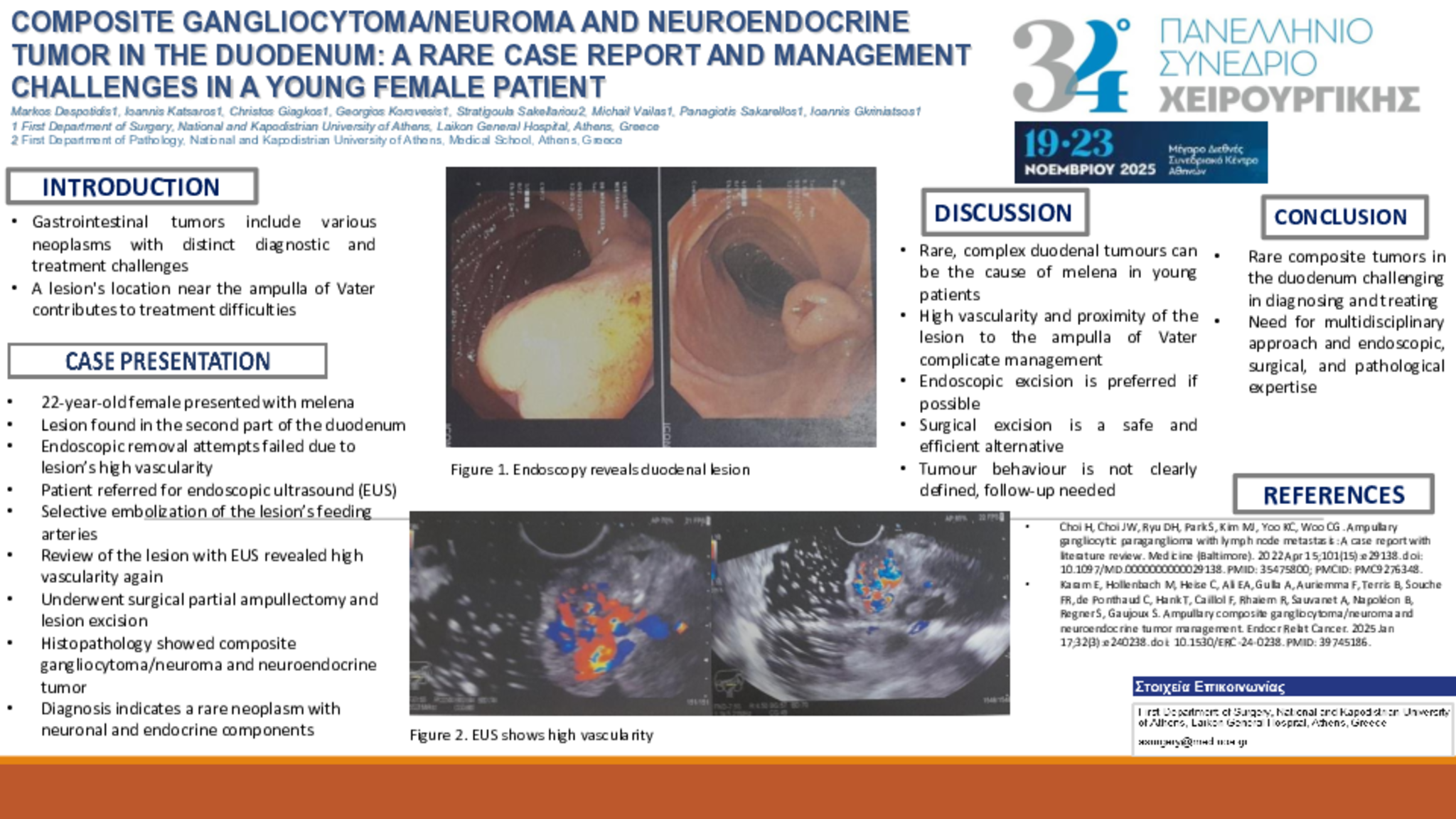
Gastrointestinal tumors encompass a wide range of neoplasms, each presenting unique diagnostic and therapeutic challenges. This case report describes a rare occurrence of a composite gangliocytoma/neuroma and neuroendocrine tumor in the duodenum of a young female patient. The complex nature of this lesion, its location near the ampulla of Vater, and the complications encountered during treatment highlight the importance of a multidisciplinary approach in managing such cases.
Case Presentation:
A 22-year-old female patient presented with reported melena, prompting further investigation. During the examination, a lesion was discovered in the second part of the duodenum. Initial attempts at endoscopic removal were unsuccessful due to the highly vascular nature of the lesion. Subsequently, embolization of the lesion at the ampulla of Vater was performed, and the patient was referred for endoscopic ultrasound (EUS). The patient then underwent a partial ampullectomy and excision of the lesion.
Postoperatively, the patient developed a surgical site infection (SSI), necessitating a return to the operating room for irrigation and resuturing. The final histopathological diagnosis revealed a composite gangliocytoma/neuroma and neuroendocrine tumor, indicating a complex and rare neoplastic condition involving both neuronal and endocrine components.
Discussion:
The initial presentation of melena in a young patient led to the discovery of a rare and complex tumor. The challenges encountered during the diagnostic and treatment phases, including the highly vascular nature of the lesion and its proximity to the ampulla of Vater, underscore the importance of a careful and staged approach to management.
The histopathological findings of a composite gangliocytoma/neuroma and neuroendocrine tumor are particularly significant, as such combinations are extremely rare in the gastrointestinal tract. This diagnosis raises questions about the origin and behavior of such tumors, as well as their optimal management strategies.
Conclusion:
This case report illustrates the complexities involved in diagnosing and treating rare composite tumors in the duodenum. It underscores the importance of a multidisciplinary approach, including endoscopic, surgical, and pathological expertise, in managing such cases.
- 10 προβολές
Abstract ID
ΑΑ007