
University Hospital of Ioannina
Introduction
Anterior mediastinal masses are uncommon entities, classically summarized by the “4 Ts”: thymoma, teratoma (and other germ cell tumors), thyroid lesions, and “terrible” lymphoma. Primary mediastinal seminomas represent a rare subset of extragonadal germ cell tumors, typically affecting young men, but may also present atypically in older patients.
Case presentation
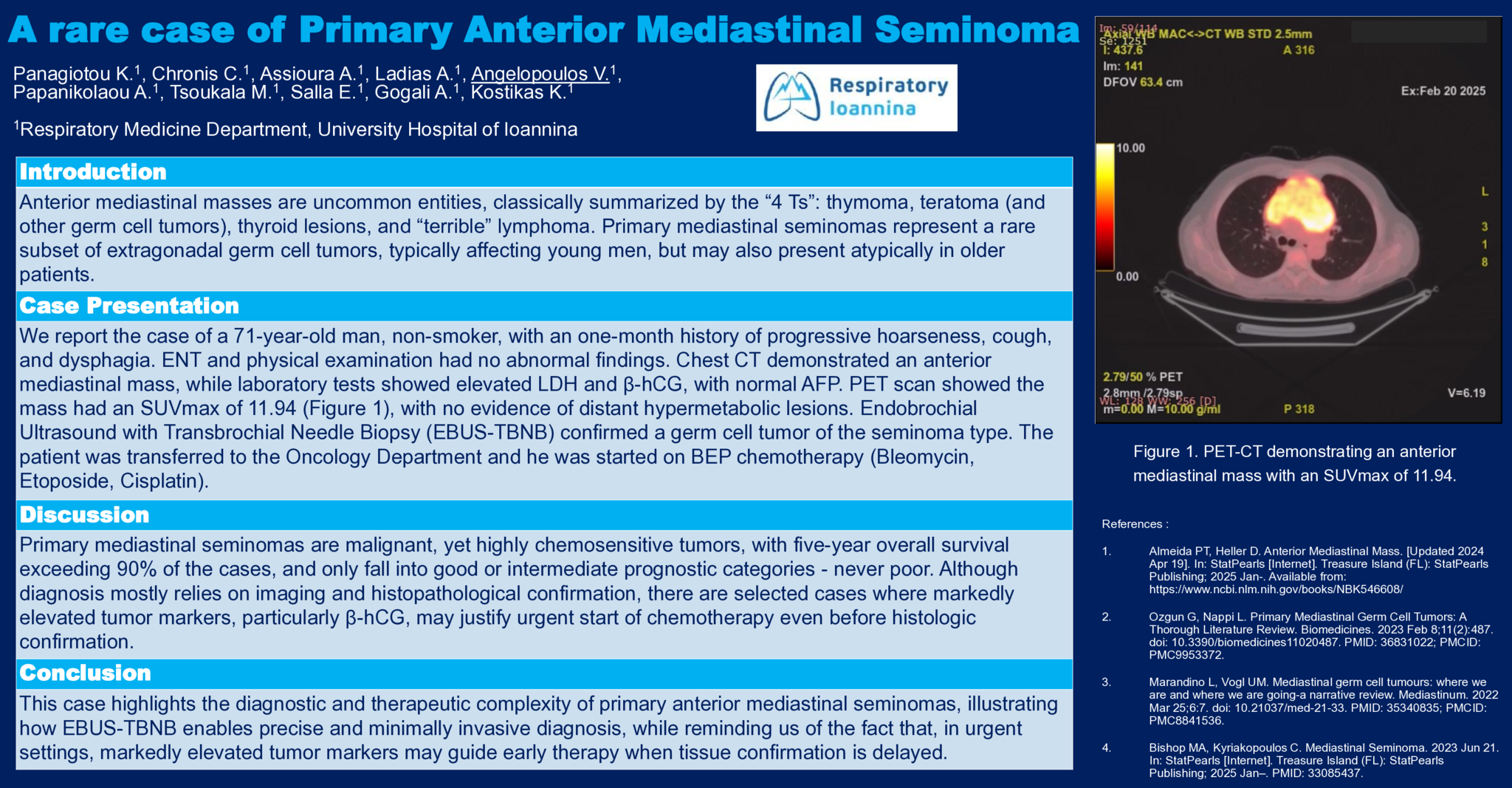
We report the case of a 71-year-old man, non-smoker, with an one-month history of progressive hoarseness, cough, and dysphagia. ENT and physical examination had no abnormal findings. Chest CT demonstrated an anterior mediastinal mass, while laboratory tests showed elevated LDH and β-hCG, with normal AFP. PET scan showed the mass had an SUVmax of 11.94 (Figure 1), with no evidence of distant hypermetabolic lesions. Endobrochial Ultrasound with Transbrochial Needle Biopsy (EBUS-TBNB) confirmed a germ cell tumor of the seminoma type. The patient was transferred to the Oncology Department and he was started on BEP chemotherapy (Bleomycin, Etoposide, Cisplatin).
Discussion
Primary mediastinal seminomas are malignant, yet highly chemosensitive tumors, with five-year overall survival exceeding 90% of the cases, and only fall into good or intermediate prognostic categories - never poor. Although diagnosis mostly relies on imaging and histopathological confirmation, there are selected cases where markedly
elevated tumor markers, particularly β-hCG , may justify urgent start of chemotherapy even before histologic confirmation.
Conclusion
This case highlights the diagnostic and therapeutic complexity of primary anterior mediastinal seminomas, illustrating how EBUS-TBNB enables precise and minimally invasive diagnosis, while reminding us of the fact that, in urgent settings, markedly elevated tumor markers may guide early therapy when tissue confirmation is delayed.
- 4 προβολές
Abstract ID
ΑΑ181
Presentation day
Presentation monitor