
University Of Thessaly
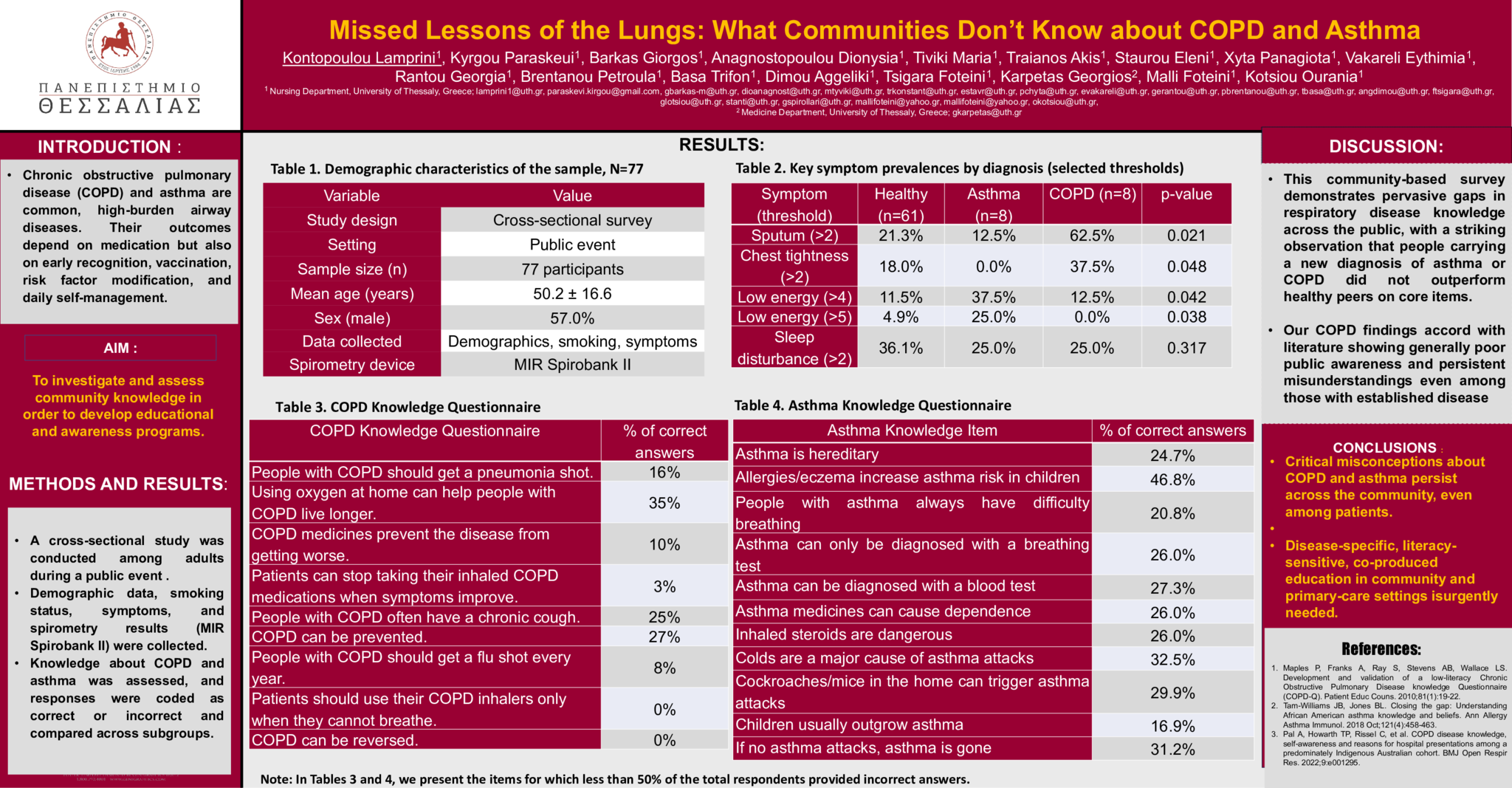
Background: Community beliefs about COPD and asthma influence prevention, diagnosis, and self-management. We assessed item-level knowledge gaps to identify actionable education targets.
Methods: A cross-sectional survey was conducted among adults at a public event (n=77; mean age 50.2±16.6 years; 57.0% male). Data included demographics, smoking, symptoms, and spirometry (MIR Spirobank II). Knowledge of COPD and asthma was measured; responses were coded correct/incorrect and compared across subgroups.
Results: Ever-smokers (59.2%) had lower %-predicted FEV₁ (90.8±18.7 vs 100.5±13.3, p=0.032) and FVC (93.9±17.1 vs 104.9±15.5, p=0.018). Airflow obstruction was present in 18.2%; eight participants each received new diagnoses of asthma or COPD. COPD knowledge was poorest for vaccination (pneumococcal 16%, influenza 8%), irreversibility (0%), and maintenance inhaler use (3%), while smoking causation/cessation (51–53%) and dyspnea (56%) were better recognized. Women more often rejected “on-demand only” inhaler use (p=0.006). Asthma knowledge was high for non-contagiousness (75.3%) and smoking risk (70.1%), but very low for exercise (8.6%), early fatality (9.7%), stigma (12.9%), and inhaled steroid safety (26.0%). Ever-smokers less often knew asthma is not contagious (p=0.023). Newly diagnosed individuals did not outperform healthy peers.
Conclusions: Critical misconceptions about COPD and asthma persist across the community and even among patients. Disease-specific, literacy-sensitive, co-produced education in community and primary-care settings is urgently needed.
- 5 προβολές
Abstract ID
ΑΑ55
Presentation day
Presentation monitor