
Department Of Surgery, General Hospital Of Aigio
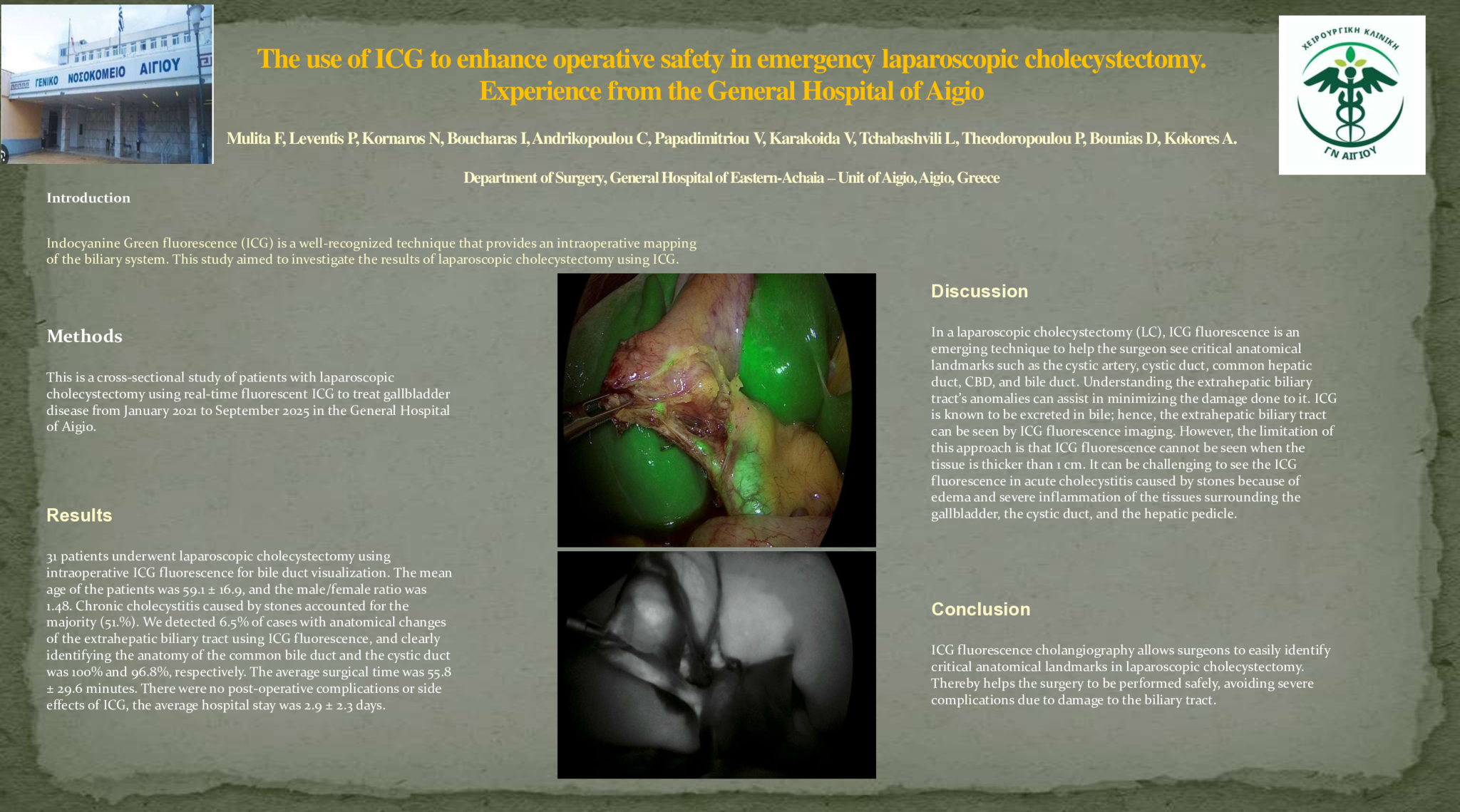
Background: Indocyanine Green fluorescence (ICG) is a well-recognized technique who provides an intraoperative mapping of the biliary system.This study aimed to investigate the results of laparoscopic cholecystectomy using (ICG). Methods: This is a cross sectional study of patients with laparoscopic cholecystectomy using real-time fluorescent ICG to treat gallbladder disease from January 2021 to September 2025 in General Hospital of Aigio. Results: There were 31 patients underwent laparoscopic cholecystectomy using intraoperative ICG fluorescence for bile duct visualization. The mean age of the patients was 59.1 ± 16.9, and the male/female ratio was 1.48. Chronic cholecystitis caused by stones accounted for the majority (51.%). We detected 6.5% of cases with anatomical changes of the extrahepatic biliary tract using ICG fluorescence, and clearly identifying the anatomy of the common bile duct and the cystic duct was 100% and 96.8%, respectively. The average surgical time was 55.8 ± 29.6 minutes. There were no post-operative complications and side-effects of ICG, the average hospital stay was 2.9 ± 2.3 days. Conclusions: ICG fluorescence cholangiography allows surgeons easily identify critical anatomical landmarks in laparoscopic cholecystectomy. Thereby helping the surgery to be performed safely, avoiding severe complications due to damage to the biliary tract.
- 10 προβολές
Abstract ID
ΑΑ105