Nicosia General Hospital
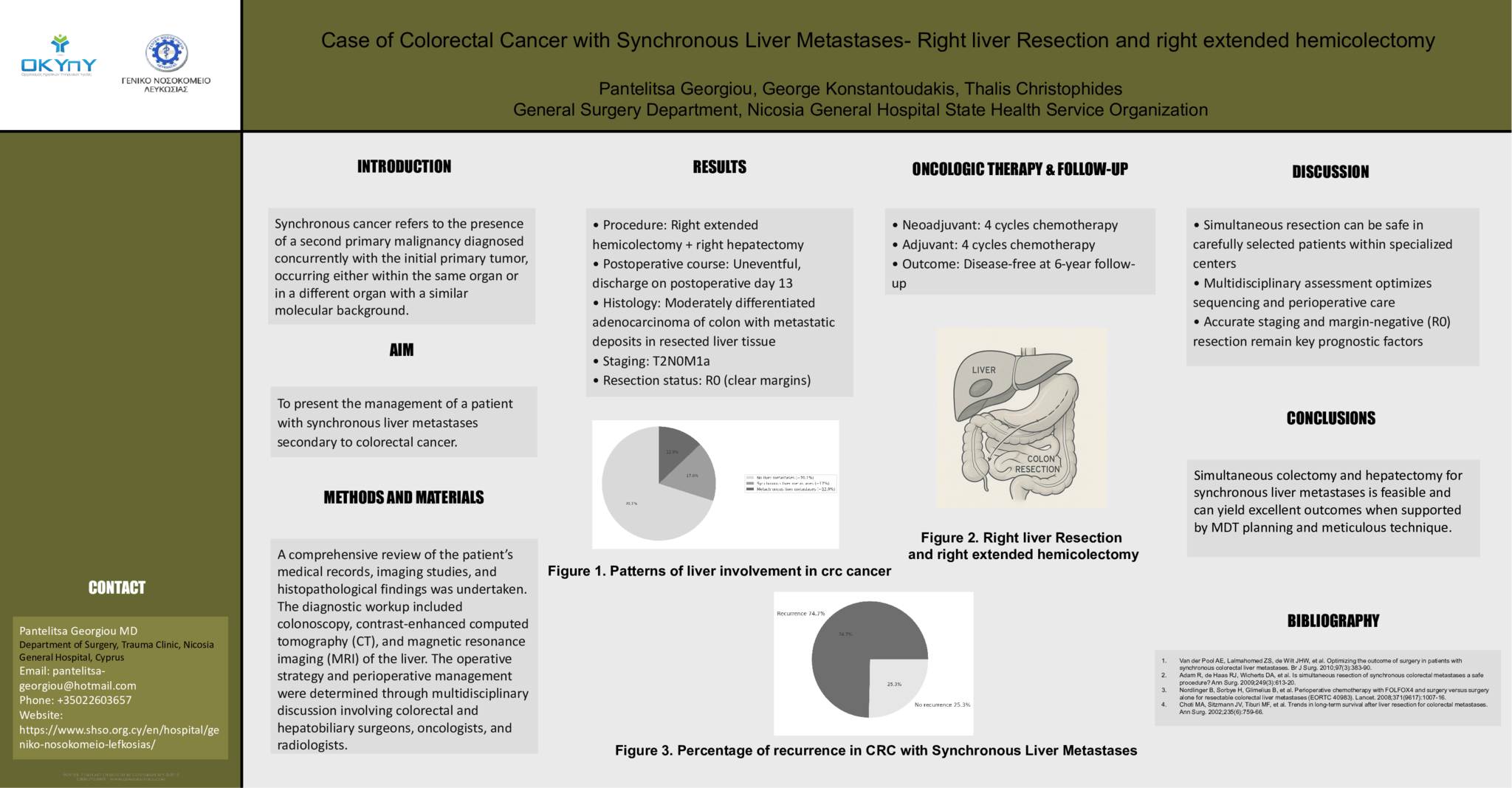
Case of Colorectal Cancer with Synchronous Liver Metastases- Right liver Resection and right extended hemicolectomy
Pantelitsa Georgiou, George Konstantoudakis, Thalis Christophides
General Surgery Department, Nicosia General Hospital State Health Service Organization
Introduction: Synchronous cancer refers to the presence of a second primary malignancy diagnosed concurrently with the initial primary tumor, occurring either within the same organ or in a different organ with a similar molecular background. Unlike metastasis, it represents a distinct primary disease process. Approximately 50% of patients with colorectal cancer present with synchronous colorectal and hepatic malignancies.
Aim: To present the management of a patient with synchronous liver metastases secondary to colorectal cancer.
Methods: A comprehensive review of the patient’s medical records, imaging studies, and histopathological findings was undertaken. The diagnostic workup included colonoscopy, contrast-enhanced computed tomography (CT), and magnetic resonance imaging (MRI) of the liver. The operative strategy and perioperative management were determined through multidisciplinary discussion involving colorectal and hepatobiliary surgeons, oncologists, and radiologists.
Results: A 66-year-old patient diagnosed with adenocarcinoma of the transverse colon and synchronous liver metastases involving the right hepatic lobe underwent a simultaneous right extended hemicolectomy and right hepatectomy. The postoperative course was uneventful, and the patient was discharged on postoperative day 13. Histopathological analysis confirmed moderately differentiated adenocarcinoma of the colon with metastatic deposits in the resected hepatic tissue (T2N0M1a, R0 resection). The patient received four cycles of chemotherapy preoperatively and an additional four cycles postoperatively, and remains disease-free at six-year follow-up.
Conclusion:
Simultaneous resection of colorectal cancer and synchronous liver metastases can be safely performed in carefully selected patients within specialized centers. Multidisciplinary assessment, meticulous surgical planning, and appropriate postoperative care are essential to achieving favorable outcomes while minimizing morbidity and mortality.
- 11 προβολές
Abstract ID
ΑΑ364