Royal College Of Surgeons In Ireland
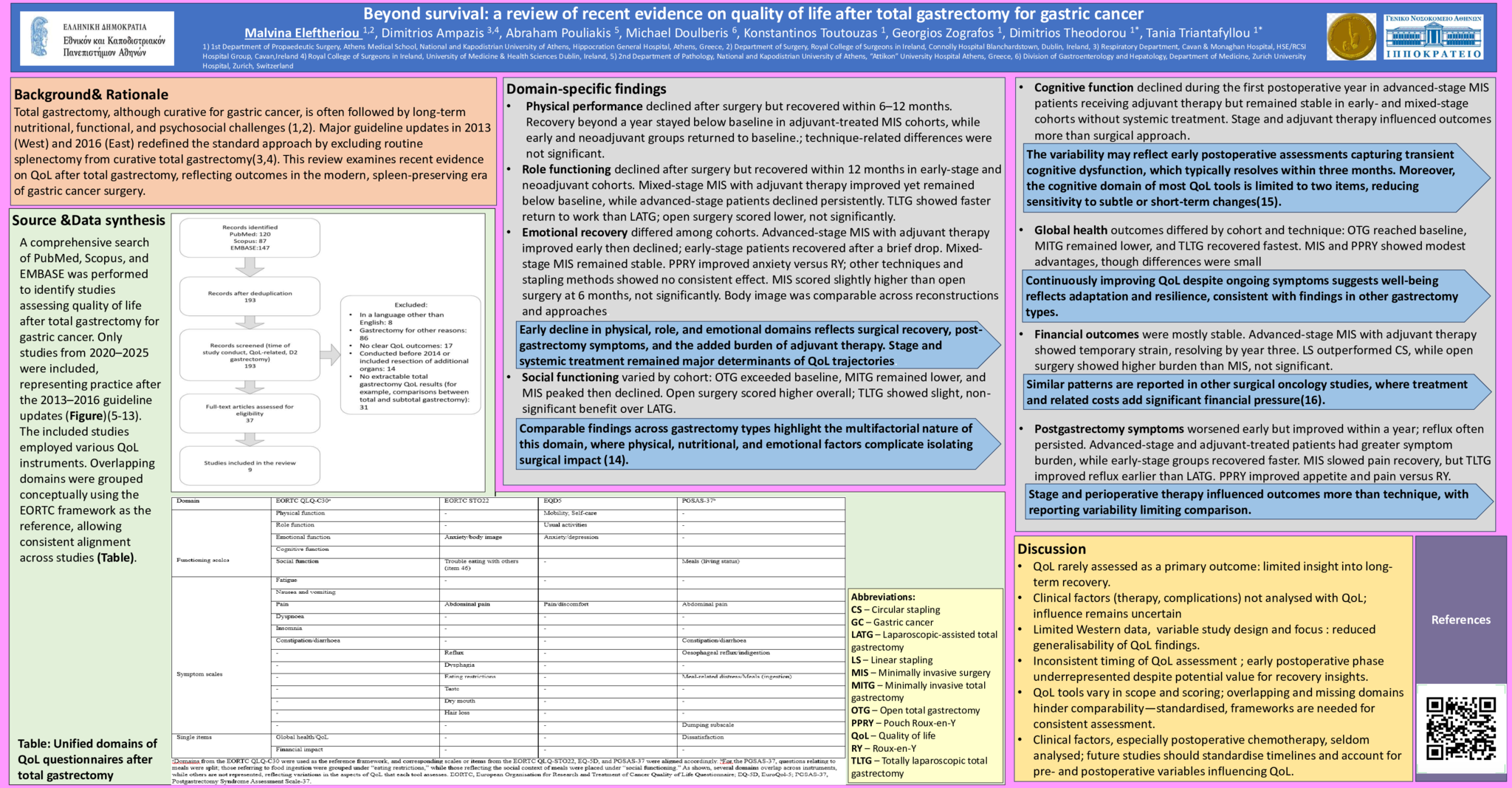
As survival rates improve following total gastrectomy for gastric cancer, quality of life (QoL) has become a critical assessment outcome alongside traditional oncological metrics. Both the short‑ and long‑term course of recovery can be affected by post‑gastrectomy syndromes and other postoperative outcomes, yet QoL remains underreported and underutilised in clinical evaluation. A literature review of studies published after 2020 that assessed QoL following total gastrectomy for gastric cancer was performed, focusing on curative resections without additional major organ removal. Articles were identified through PubMed, Scopus, and EMBASE using combinations of keywords related to gastrectomy, QoL, and validated patient‑reported outcome instruments. A total of nine studies met the inclusion criteria. Most functional outcomes (physical, role, and emotional functioning) consistently declined early on after the operation, with recovery typically beginning after ~6 months. Key symptoms, particularly reflux and eating restrictions, remained variable and could persist for up to 2 years. Global QoL improved over time despite ongoing symptoms, suggesting a degree of psychosocial adjustment. Surgical approach and anastomotic technique had limited long‑term impact, though minimally invasive methods showed modest short‑term advantages. Despite its clinical importance, QoL remains an underused primary outcome in gastric cancer surgery. A stronger focus on standardised, patient‑centred assessment could bridge the gap between technical success and meaningful recovery. Identifying the distinct course of QoL after total gastrectomy may facilitate its integration into surgical planning and care. To the best of our knowledge, this is the first review to focus exclusively on QoL after total gastrectomy in the era of updated surgical guidelines, providing an up‑to‑date framework for improving patient outcomes.
- 9 προβολές
Abstract ID
ΑΑ254