Γ.Ν.Α. Γ. Γεννηματάς
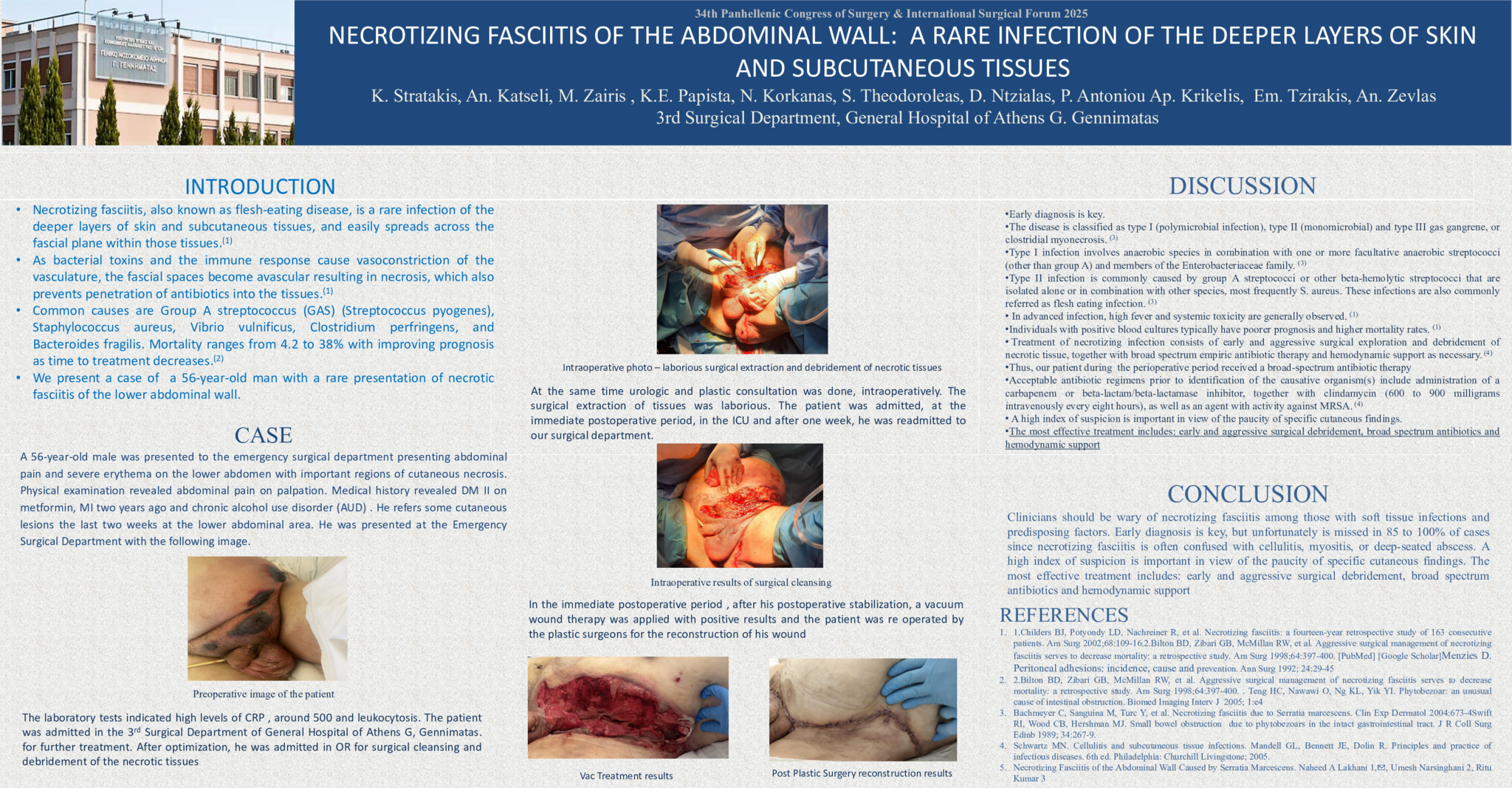
Necrotizing fasciitis of the abdominal wall: a rare infection of the deeper layers of skin and subcutaneous tissues.
Konstantinos Stratakis, Anastasia Katseli, Mihail Zairis , Kalliope-Eleni Papista, Nikolaos Korkanas, Sotirios Theodoroleas, Dimitrios Ntzialas , Panagiotis Antoniou, Apostolos Krikelis, Emmanouil Tzirakis, Andreas Zevlas,
3rd Surgical Department, General Hospital of Athens G. Gennimatas
Introduction
Necrotizing fasciitis, also known as flesh-eating disease, is a rare infection of the deeper layers of skin and subcutaneous tissues that spreads across the fascial plane within those tissues. As bacterial toxins and the immune response cause vasoconstriction of the vasculature, the fascial spaces become avascular resulting in necrosis, which also prevents penetration of antibiotics into the tissues. Mortality is high with improving prognosis as time to treatment decreases.
Purpose
The presentation of a rare surgical entity with high mortality.
Material and Method
We present a case of a 56-year-old man with a rare presentation of necrotic fasciitis of the lower abdominal wall. A 56-year-old male was admitted to the third surgical department presenting abdominal pain and severe erythema on the lower abdomen with important regions of cutaneous necrosis. Physical examination revealed abdominal pain on palpation. Medical history revealed DM II on metformin, MI two years ago and chronic alcohol use disorder (AUD). He referred cutaneous lesions that last two weeks, at the same area.
Results
The patient was optimised and admitted in OR for surgical cleansing and debridement of the necrotic tissues. At the same time urologic and plastic consultation was done. The surgical extraction of tissues was laborious. The patient was admitted, at the immediate postoperative period, in the ICU and after one week, he was readmitted to our surgical department.
Conclusion
Clinicians should be wary of necrotizing fasciitis among those with soft tissue infections and predisposing factors. Early diagnosis is key, but unfortunately is missed in 85 to 100% of cases since necrotizing fasciitis is often confused with cellulitis, myositis, or deep-seated abscess. A high index of suspicion is important in view of the paucity of specific cutaneous findings. The most effective treatment includes: early and aggressive surgical debridement, broad spectrum antibiotics and hemodynamic support.
- 11 προβολές
Abstract ID
ΑΑ236