ΓΝΑ ΣΙΣΜΑΝΟΓΛΕΙΟ
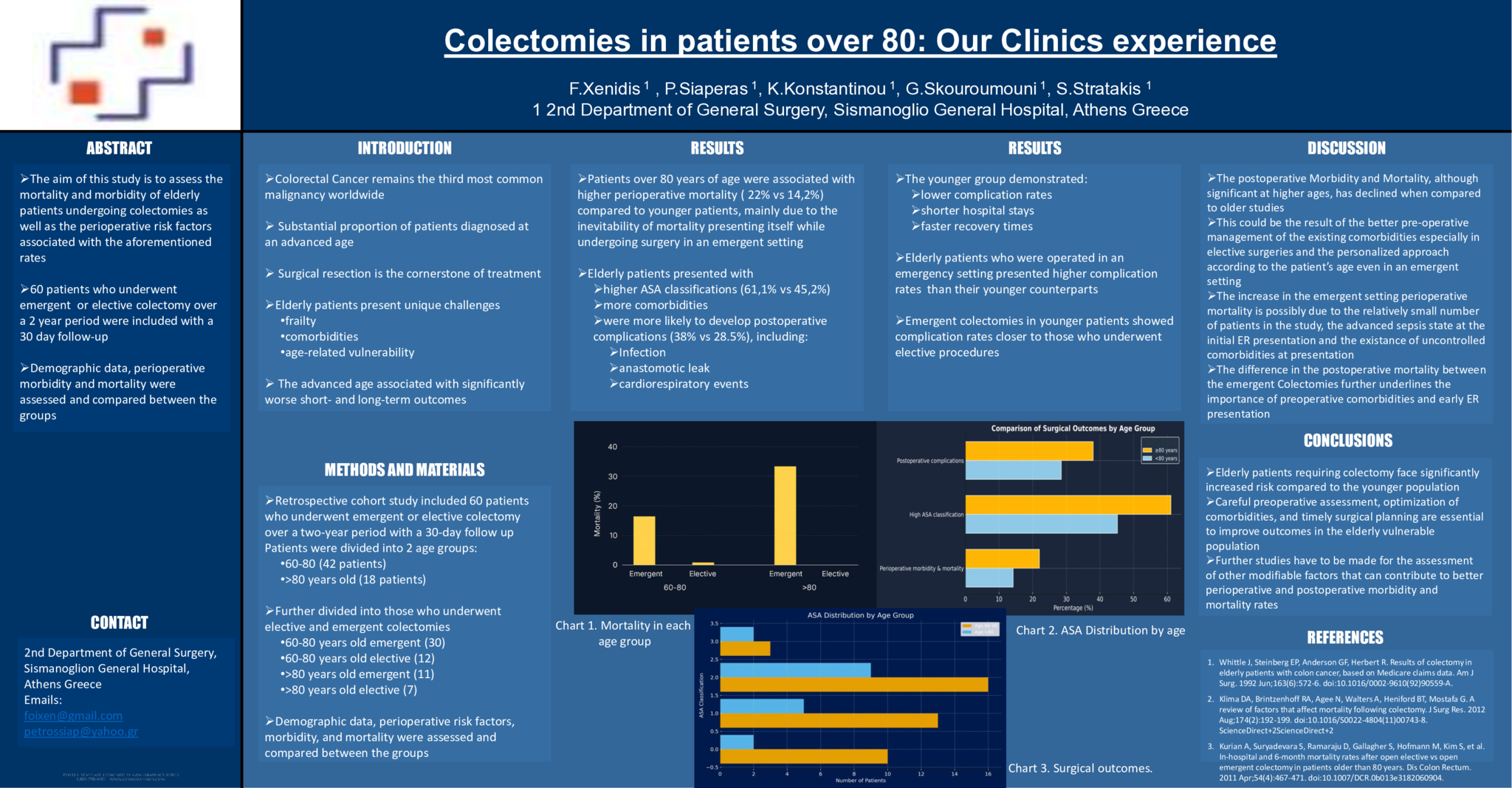
Colectomies in patients over 80: Our Clinics experience
Introduction:
It is well known that Colorectal Cancer remains the third most common malignancy worldwide, with a substantial proportion of patients diagnosed at an advanced age. Surgical resection is the cornerstone of treatment, however elderly patients may present unique challenges due to frailty, comorbidities and age-related vulnerability. The advanced age has been associated with significantly worse short- and long-term outcomes.
Aim:
The aim of this study is to assess the mortality and morbidity of elderly patients undergoing colectomies as well as the perioperative risk factors associated with the aforementioned rates.
Methods:
The retrospective cohort study included 60 patients who underwent emergent or elective colectomy over a two-year period. Patients were divided into 2 age groups: 60-80 (42 patients) and >80 years old (18 patients)Further divided into those who underwent elective or emergent colectomy. Demographic data, perioperative risk factors, morbidity, and mortality were assessed and compared between the groups.
Results:
Patients over 80 years of age were associated with higher perioperative morbidity and mortality ( 22% vs 14,2%)compared to younger patients. Elderly patients presented with higher ASA classifications (61,1% vs 45,2%), more comorbidities and were more likely to develop postoperative complications including infection, anastomotic leak, and cardiorespiratory events (38% vs 28.5%). In contrast, the younger group demonstrated lower complication rates, shorter hospital stays, and faster recovery times. In addition, elderly patients who were operated in an emergency setting presented higher complication rates, whereas emergency colectomies in younger patients showed complication rates closer to those who underwent elective procedures.
Conclusion:
Elderly patients requiring colectomy face significantly increased risk compared to the younger population. Careful preoperative assessment, optimization of comorbidities, and timely surgical planning are essential to improve outcomes in the elderly vulnerable population.
- 12 προβολές
Abstract ID
ΑΑ410